
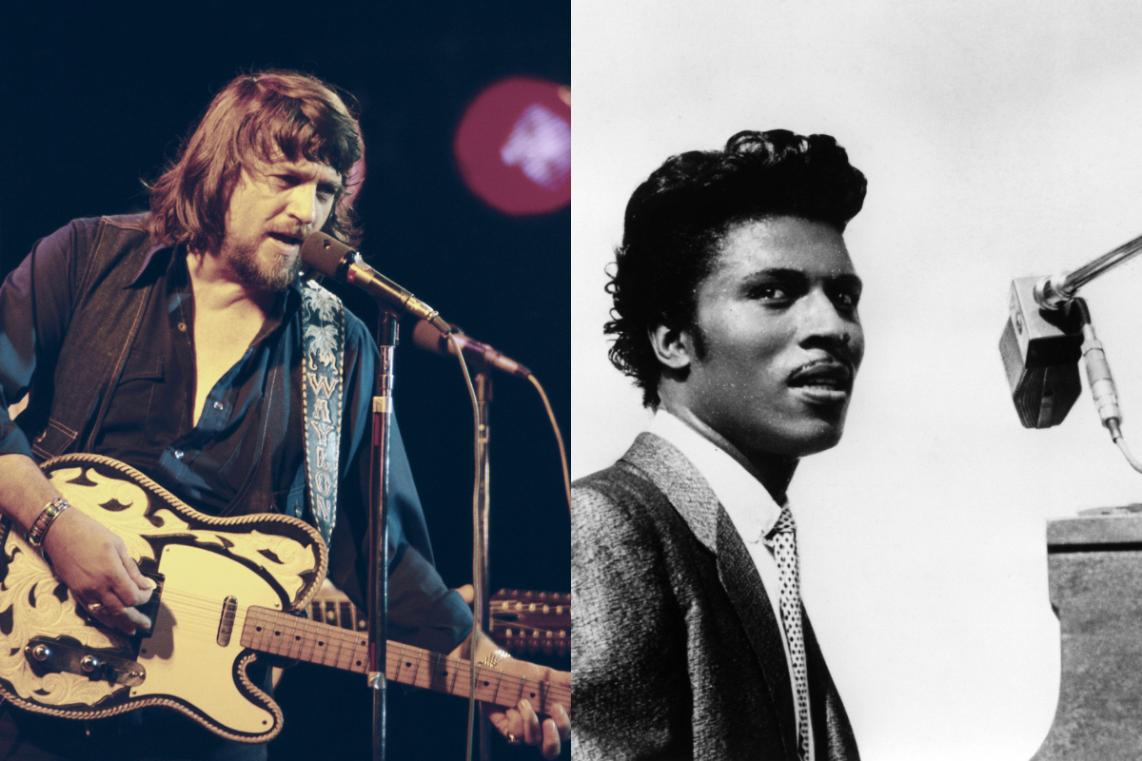
FIRED FOR PLAYING THE WRONG SONG — HOW WAYLON JENNINGS' EARLY REBELLION HELPED SHAPE A LEGEND
Before he became the face of Outlaw Country, before the fame, the records, and the unmistakable voice, Waylon Jennings was just a teenager in Texas—restless, curious, and already unwilling to follow the rules. And in one defining moment, that spirit cost him his job… but quietly set him on the path to greatness.
In the mid-1950s, Jennings found work as a radio DJ at KVOM in Littlefield, Texas. It was an exciting opportunity for a young man who lived and breathed music. Sitting behind the microphone, spinning records, and speaking to listeners—it was a chance to be part of the world he loved. But even then, Waylon wasn't content to simply follow the expected format.
At the time, radio playlists were strictly controlled, especially in small-town America. Country music dominated the airwaves, and there were clear, unspoken boundaries about what could and could not be played. But Waylon saw music differently. To him, it wasn't divided—it was connected.
He began introducing something new into his sets.
Alongside traditional country records, he started spinning songs by groundbreaking artists like Little Richard, as well as other early rock and rhythm performers. These sounds were energetic, bold, and different—and for many listeners at the time, unfamiliar and controversial.
But for Waylon, they were inspiring.
He had already begun to imagine a world where musical styles could blend—where the storytelling of country could meet the rhythm and spirit of blues and early rock. It was an idea ahead of its time, but one he believed in deeply. Even as a teenager, he was asking questions that would later define his career: What if these sounds came together? What if music didn't have to stay in separate lanes?
Not everyone shared that vision.
Each time Waylon played a record by Little Richard, the station's owner would react strongly. It wasn't just disapproval—it was frustration, even anger. The music challenged expectations, and in that era, stepping outside those expectations often came with consequences.
Still, Waylon didn't stop.
One night, he made a decision that would change everything. He played not just one—but two Little Richard records back-to-back.
That was enough.
The station owner didn't call ahead or issue a warning. He showed up in person, furious. And before long, Waylon Jennings was fired from his job.
At the time, it may have felt like a setback. A young man losing one of his first real opportunities. But in hindsight, it was something else entirely—it was a defining moment of identity.
Because what got him fired wasn't carelessness.
It was conviction.
Waylon Jennings believed in the power of music to cross boundaries. He believed that different sounds could come together to create something new. And he was willing to stand by that belief, even when it cost him.
Years later, that same mindset would become the foundation of his success.
As one of the pioneers of Outlaw Country, Waylon would go on to break free from industry control, reshape the sound of country music, and create a style that blended influences in ways that felt both natural and revolutionary. The very thing that once got him fired—his refusal to conform—became the reason he stood apart.
In a beautiful twist of fate, he would later pay tribute to Little Richard by recording his classic song "Lucille," bringing it to the top of the country charts. It was more than a cover—it was a full-circle moment, a quiet acknowledgment of the music that had inspired him all along.
Looking back, that teenage DJ in Texas wasn't just playing records.
He was listening to the future.
And sometimes, the moments that seem like failures at the time turn out to be the very ones that define who we become.
For Waylon Jennings, getting fired wasn't the end of something.
It was the beginning of everything.