
There are moments meant to remain private… and then there are moments that, despite their intimacy, carry a truth so powerful they reach far beyond the room in which they happen.
At the farewell for Connie Francis, what unfolded was not planned as a public memory. It was not designed for attention or remembrance on a grand scale. It was meant to be quiet—a final goodbye shared among those who knew her not as a legend, but as a mother, a presence, a voice that had lived close to the heart.
And yet, something happened that changed everything.
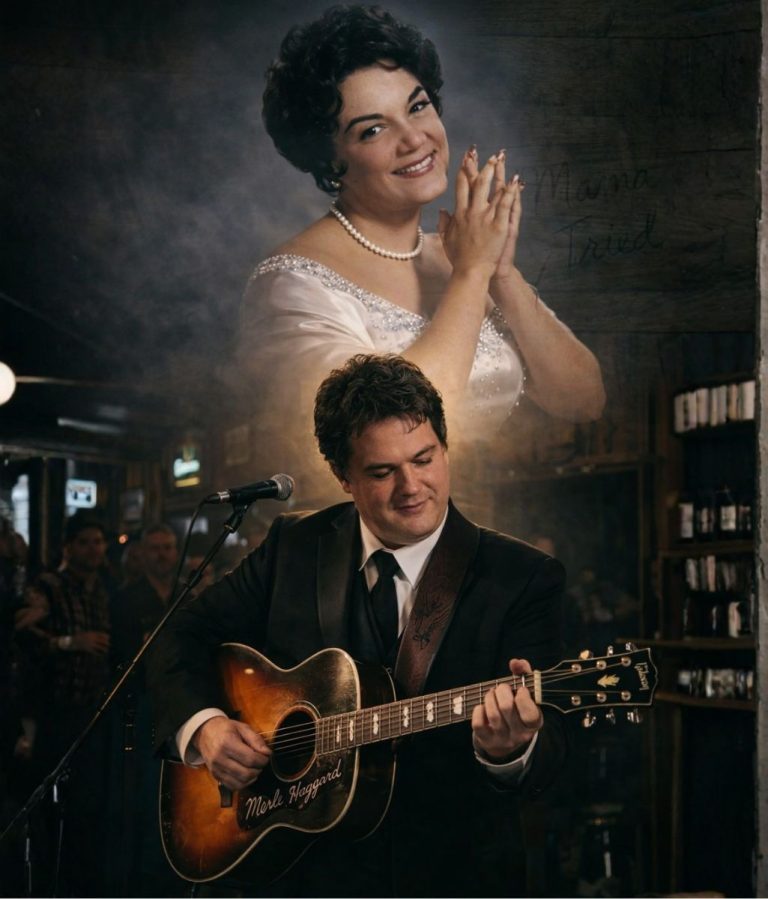
Her son stepped onto the stage.
There was no announcement.
No introduction.
Just a moment—simple, unguarded, and deeply human.
Those present could feel it immediately. The air shifted. Conversations ceased. The quiet that followed was not empty—it was full of expectation, of emotion, of something unspoken yet deeply understood.
He held the microphone gently, as if even that required care.
And for a brief moment, he said nothing.
Because some moments do not begin with words.
They begin with feeling.
Then, he started to sing.
The song was not one the world recognized. It was not part of her public legacy, not something tied to her career or shared across stages. It was something else entirely—a melody she had once whispered to him in private, a piece of music that belonged not to the world, but to their relationship.
And now, in that moment, it was being heard for the first time.
His voice trembled.
Not from uncertainty.
But from the weight of what he was carrying.
Each note felt fragile, as if it might break under the emotion behind it. And yet, it held. Because what gave it strength was not technique—it was truth.
For those in the room, the experience was immediate.
Not overwhelming in volume.
But overwhelming in meaning.
Because what they were hearing was not just a song.
It was a memory being given voice.
A connection being shared.
A farewell that had once existed only between two people, now opening itself to others—not by intention, but by necessity.
Some lowered their heads.
Others closed their eyes.
Many wept quietly, not out of spectacle, but because the moment reached something personal within them—a memory of their own, a loss, a love that still lingered in ways words could not explain.
And beyond that room, as the moment spread, the reaction was the same.
People felt it.
Across generations.
Across distances.
Because grief, when expressed honestly, does not remain contained.
It resonates.
As the song unfolded, it became clear that this was not about saying goodbye in a final sense.
It was about carrying something forward.
Each line felt like a promise.
Each note like a step toward preserving something that could not be lost, even in absence.
When the final note faded, there was no immediate applause.
No sound at all.
Just silence.
But it was not empty.
It was full—of memory, of love, of everything that had just been shared without needing explanation.
And in that silence, something remained.
A feeling.
A connection.
A quiet understanding that what had just taken place was not simply a farewell.
It was a continuation.
Because in that trembling moment, as his voice carried through the room, Connie Francis's presence did not feel distant.
It felt near.
Alive in the music.
Alive in the memory.
Alive in the hearts of those who had just witnessed something they would never forget.
And perhaps that is what made it so powerful.
Not the song itself.
But what it represented:
That even when a voice is gone…
It can still be heard—through love, through memory, and through those who choose to carry it forward.